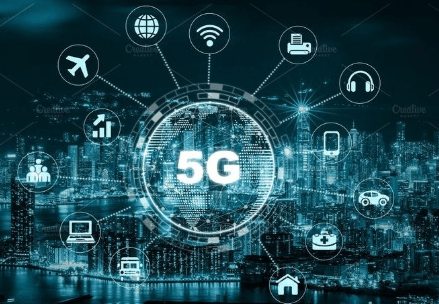
5G enables ultra-low latency, massive device connectivity, and edge-enabled intelligence that push compute and decision-making closer to data sources. End-to-end architectures optimize scheduling and transport, while edge and near-data computing deliver instantaneous analytics and offline resilience. Network slicing and advanced spectral efficiency support diverse, real-time use cases at scale with secure lifecycle management. Interoperable ecosystems and autonomous orchestration unlock rapid innovation across IoT, autonomous systems, and smart infrastructure, inviting further exploration of the practical tradeoffs ahead.
How 5G Enables Ultra-Low Latency in Real-Time Tech
5G enables ultra-low latency by compressing the end-to-end communication loop to a fraction of a second, transforming how real-time applications behave.
The architecture prioritizes latency optimization through streamlined scheduling, edge coordination, and resilient transport.
This approach strengthens protocol resilience, enabling deterministic responses and reliable synchronization across networks, devices, and services, empowering freedom-driven ecosystems to innovate without delay.
The Edge: Shaping Computation Close to Data Sources
As data proliferates at the edge, computing moves closer to its sources, enabling instantaneous analytics, offline resilience, and context-aware decisions.
Edge computing reframes architecture around data locality, reducing backhaul load while preserving security and sovereignty.
Strategic prioritization of latency budgets and orchestration efficiency drives resilient pipelines, empowering autonomous services and scalable insights beyond central constraints, with freedom-enabled, data-driven innovation.
Massive Connectivity: Powering IoT at Scale
The expansion of connectivity to billions of devices is redefining how systems capture, interpret, and respond to real-time signals, enabling IoT at unprecedented scale.
Massive connectivity compounds data flows, enabling rapid decision cycles and resilient operations.
Edge analytics and device orchestration enable autonomous coordination, optimized resource use, and scalable intelligence, guiding strategic investments and unleashing freedom through interconnected ecosystems that learn, adapt, and evolve collective capabilities.
Enhanced Spectral Efficiency and Network Slicing for Innovative Use Cases
Enhanced spectral efficiency and network slicing unlock tailored performance profiles across diverse ecosystems, enabling dense, heterogeneous deployments to coexist without compromise.
This approach yields real time ultra low latency and optimized edge computing, supporting massive IoT and complex device orchestration.
Strategic resource partitioning elevates spectral efficiency, while dynamic life-cycle management enables flexible, secure service provisioning for innovative use cases.
See also: technicalpictures
Frequently Asked Questions
How Does 5G Reduce Energy Consumption for Devices at Scale?
Energy efficiency improves as 5G enables ultra-low-power communication, streamlined device scaling, and optimized network sleep modes. By consolidating connectivity and edge processing, energy use per device decreases at scale, guiding strategic deployments toward sustainable, freedom-centric technology ecosystems.
What Are the Main Security Concerns With 5g-Enabled Edge Apps?
Security concerns with 5G-enabled edge apps center on data privacy, rogue devices, edge vulnerabilities, and supply chain risks; network slicing and cyber resilience shape strategy, while vigilance against sabotage preserves freedom and trustworthy, transparent infrastructure.
Can 5G Support Aerial Networks and Drone Autonomy Reliably?
Yes, 5G can support aerial networks and drone autonomy with low latency, high bandwidth, and edge processing; imagining scalable, resilient skies where drone autonomy thrives, data-driven strategies enable freedom through reliable, strategic connectivity and real-time decision making.
How Will 5G Handle Real-Time Analytics for Critical Infrastructure?
Ironically, 5G delivers real time analytics for critical infrastructure, enabling autonomous resilience. It envisions data-driven dashboards, strategic risk mapping, and predictive maintenance, empowering freedom-seeking operators to optimize uptime, security, and adaptive responses across distributed systems.
What Standards Govern Interoperability Across Global 5G Deployments?
Interoperability standards guide seamless cross-border 5G functionality, while global certifications ensure consistent safety and performance. The vision embraces unified frameworks, data-driven benchmarks, and strategic adaptability, empowering freedom-seeking stakeholders to deploy adaptable networks with confidence and scalable interoperability.
Conclusion
In a world captivated by speed, 5G proves it can do more than fling data; it schedules destiny. The network’s ultra-low latency makes machines grin at real-time decisions, while edge computing pretends to be humble yet quietly owns the data. Massive IoT connectivity promises order from chaos, and spectral efficiency sustains the illusion of limitless bandwidth. With network slicing as the wand, innovation marches on—ironically efficient, strategically bold, and relentlessly data-driven, as if the future already has a roadmap.