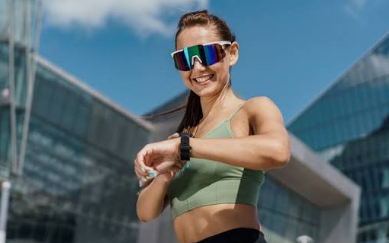
For a long time, sports eyewear was strictly utility-driven. Men who ran marathons, cycled across rocky terrains, or spent weekends playing intensive football matches had to settle for bulky, wrap-around plastic shades that looked purely utilitarian. On the flip side, lifestyle glasses offered the aesthetic appeal but failed instantly under physical stress, slipping down the nose or snapping at the hinges.
In 2026, that boundary has completely dissolved. The rise of multi-functional fashion has paved the way for high-performance sport style glasses that flawlessly blend athletic durability with sleek, street-ready designs.
Whether you are pushing your limits in a heavy gym session, clocking a 10km run, or running weekend errands around town, your eyewear can now deliver peak performance without sacrificing your style.
1. Advanced Materials: Built for the Impact
When you are active, standard acetate or cheap injection-molded plastics simply won’t cut it. Modern athletic eyewear relies on advanced material science to survive accidental drops, sweat exposure, and high impacts.
TR90 (Thermoplastic Memory Polymer)
TR90 is the undisputed king of active frame materials. It is a Swiss-engineered thermoplastic that is incredibly lightweight, flexible, and ground-breakingly durable. Because it possesses a “memory” trait, you can bend the frame arms significantly under pressure, and they will effortlessly snap back into their original shape instead of cracking.
Polycarbonate Lenses
Standard glass lenses pose a massive safety risk during high-velocity sports. Sport-style eyewear features optical-grade polycarbonate lenses, which are up to 10 times more impact-resistant than standard plastic or glass. They act as a physical shield for your eyes against kicked-up gravel, low-hanging branches, or stray balls.
2. No-Slip Ergonomics: Stability in Motion
There is nothing more frustrating than having to push your glasses back up your nose bridge in the middle of a heavy lift or a sprint. High-quality athletic frames resolve this with specialized grip mechanics.
Premium sport-style glasses integrate hydrophilic (water-loving) rubber coatings on the nose pads and temple tips. Instead of becoming slick when you sweat, this specialized rubber material actually increases its grip as moisture builds up. This creates a secure, bounce-free fit that locks the glasses comfortably onto your face during rigorous movement.
3. Core Lens Enhancements for Peak Vision
True sports performance is directly tied to visual clarity. Active lifestyle glasses utilize multi-layered lens technologies to optimize how you perceive your environment:
- Polarization: Crucial for outdoor sports. Polarized lenses filter out intense horizontal light reflections, eliminating blinding glare from wet roads, car hoods, or water surfaces.
- Hydrophobic & Oleophobic Coatings: These specialized outer layers repel water drops, sweat streaks, and fingerprint oils. Raindrops slide right off the lens surface, ensuring your vision remains uncompromised in unpredictable weather.
- Anti-Fog Venting Systems: High-performance frames often integrate subtle, aerodynamic cutouts or channels along the brow bar. This design promotes consistent airflow behind the lens, instantly clearing away the internal fogging caused by your body heat during intense cardio.
4. The 2026 Shield Silhouette Trend
In 2026, the standout trend dominating the active lifestyle market is the Shield Lens. Once reserved exclusively for competitive cycling or track athletes, these single, continuous, oversized lens structures have transitioned aggressively into daily streetwear.
The shield design offers an uncompromised, panoramic field of view with zero frame lines blocking your peripheral vision. Paired with subtle mirrored coatings, it provides a confident, fast-paced, retro-futuristic aesthetic that looks just as natural paired with a technical zip-up jacket in the city as it does on a running trail.
See also: How 5G Is Enabling New Business Models
Performance Matrix: Choosing Your Active Eyewear
| Sport / Activity | Ideal Frame Feature | Key Lens Tech | Benefit |
| Running & Jogging | Ultra-lightweight TR90 | Hydrophilic Nose Pads | Prevents bouncing and sliding down the nose. |
| Cycling & Skating | Wrap-Around Shield | Polarized + Impact Polycarbonate | Blocks wind, debris, and blinding road glare. |
| Gym & Weight Training | Flex Spring Hinges | Anti-Fog Venting | Resists frame warping and manages heavy sweat steam. |
| Outdoor Sports & Travel | Mixed-Material Hybrid | UV400 Protection | Maximizes durability while offering everyday casual style. |
Frequently Asked Questions (FAQs)
Q1: What makes sport-style glasses different from ordinary sunglasses?
Ordinary sunglasses are designed strictly for sun protection and aesthetics; they use rigid materials that can shatter or slip under physical stress. Sport-style glasses are engineered with highly flexible polymers (like TR90), impact-safe lenses, and sweat-resistant rubber grips to remain locked onto your face safely during heavy movement.
Q2: Do polarized lenses affect my performance during outdoor sports?
Polarized lenses are incredibly beneficial for running, cycling, and sailing because they eliminate harsh surface glare and improve contrast. However, if your sport involves reading digital LCD screens frequently (like certain specialized bike computers or outdoor instruments), polarization can occasionally dim the screen view depending on the angle.
Q3: How do I prevent my sport glasses from fogging up during a workout?
Look for frames designed with built-in ventilation gaps or anti-fog lens coatings. Additionally, ensuring your glasses sit slightly further away from your brow allows trapped heat to escape naturally, keeping the internal lenses crystal clear.
Q4: Can I get sport-style glasses with a prescription?
Yes. Many modern sport-style frames are fully compatible with prescription lenses. For curved or wrapped shield designs, manufacturers often use specialized optical inserts that clip securely behind the main protective lens shield, giving you sharp vision alongside robust protection.
Q5: How should I clean my athletic glasses after a sweaty outdoor run?
Sweat contains salts that can slowly degrade lens coatings if left to dry. Always rinse your sport glasses with lukewarm tap water first to flush away abrasive dirt grains, clean gently with a drop of mild dish soap, and wipe dry using a clean microfiber cloth. Never use your shirt sleeve or paper towels, which can scratch the outer coatings.